
College Football Decision Advantage System
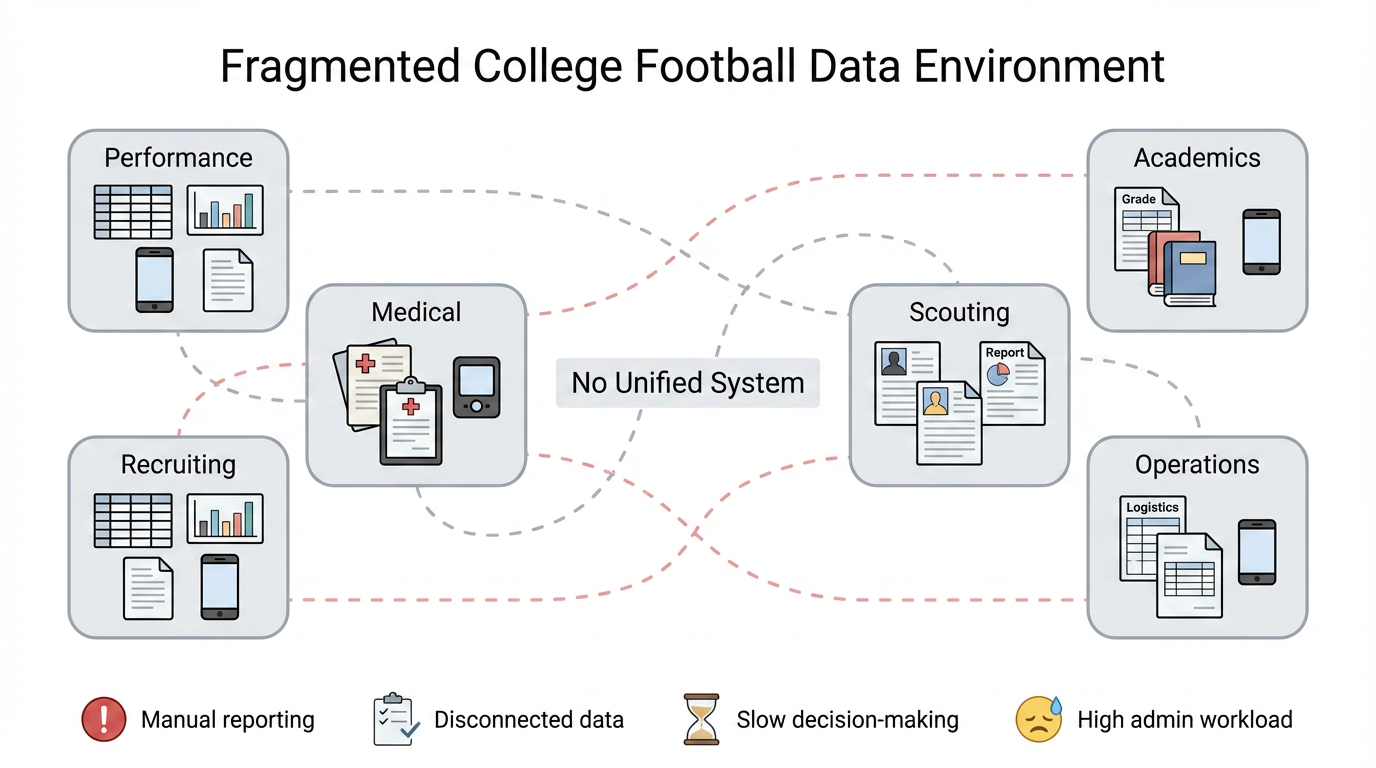
A College Football Playoff program operated like a complex, high-performing organization, with each department, including performance, medical, recruiting, academics, scouting, and operations, running its own systems and processes. Each department held valuable data, but that information lived in isolation. The result was a familiar problem: a large volume of data, but little cohesion. Every major decision required manual coordination, and leadership often had to piece together fragmented reports instead of working from a unified view of the program.
The challenge went deeper than technology. It was structural. The program managed more than 100 data sources, ranging from high-volume time-series performance files to API-driven platforms with different authentication methods. At the same time, strict governance and security requirements inside the university’s Microsoft environment limited the use of outside tools or additional software platforms. The only sustainable path was to design an integrated platform within the existing infrastructure, one that could deliver enterprise-level capability while remaining fully university-owned.
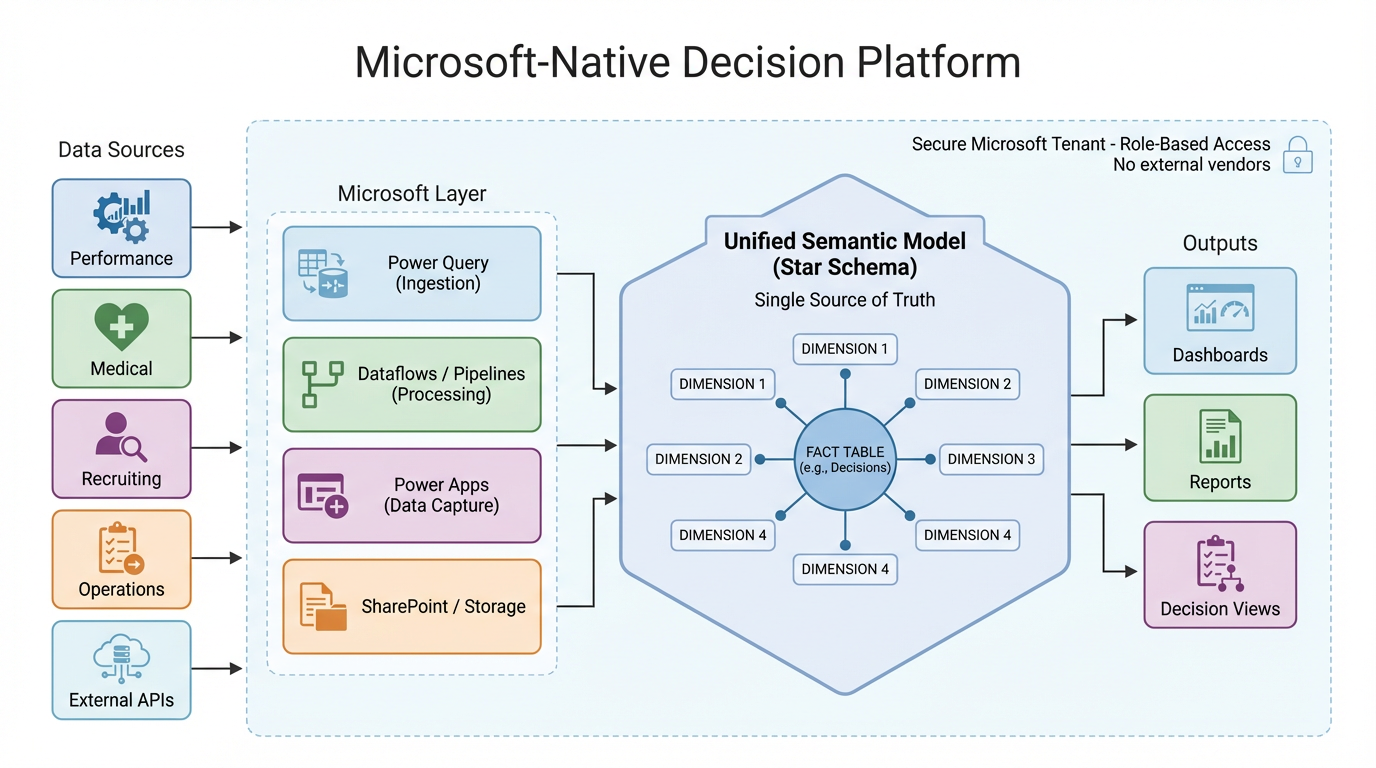
The goal was not simply to build a reporting tool, but to create a true operating platform. This would serve as an institutional foundation for how the program functions, makes decisions, and scales over time. Every part of the system, from ingestion to transformation, was built inside the Microsoft ecosystem. Data sources connected through Power Query and Fabric Dataflows, while orchestrated pipelines managed timing and dependencies. Internal capture processes used Power Apps and structured forms, ensuring data moved consistently and securely within the university’s tenant.
From a technical standpoint, the architecture balanced efficiency and scalability. Existing Microsoft resources like SharePoint were used to avoid unnecessary cost while still supporting structured staging and processing. At the core was a unified semantic model built on a clean star schema, which brought departmental datasets into a single performance framework. This created one source of truth that could be accessed across departments and roles without duplication or rework.
Governance and security guided every design decision. Role-based access, segmented workspaces, and identity-based controls aligned data visibility with institutional policy. The result was a system that met compliance requirements without limiting flexibility. Just as important, the data, infrastructure, and intellectual property stayed fully within the university. There was no dependence on third-party vendors, no outside storage risk, and no concern about continuity if staff or systems changed.
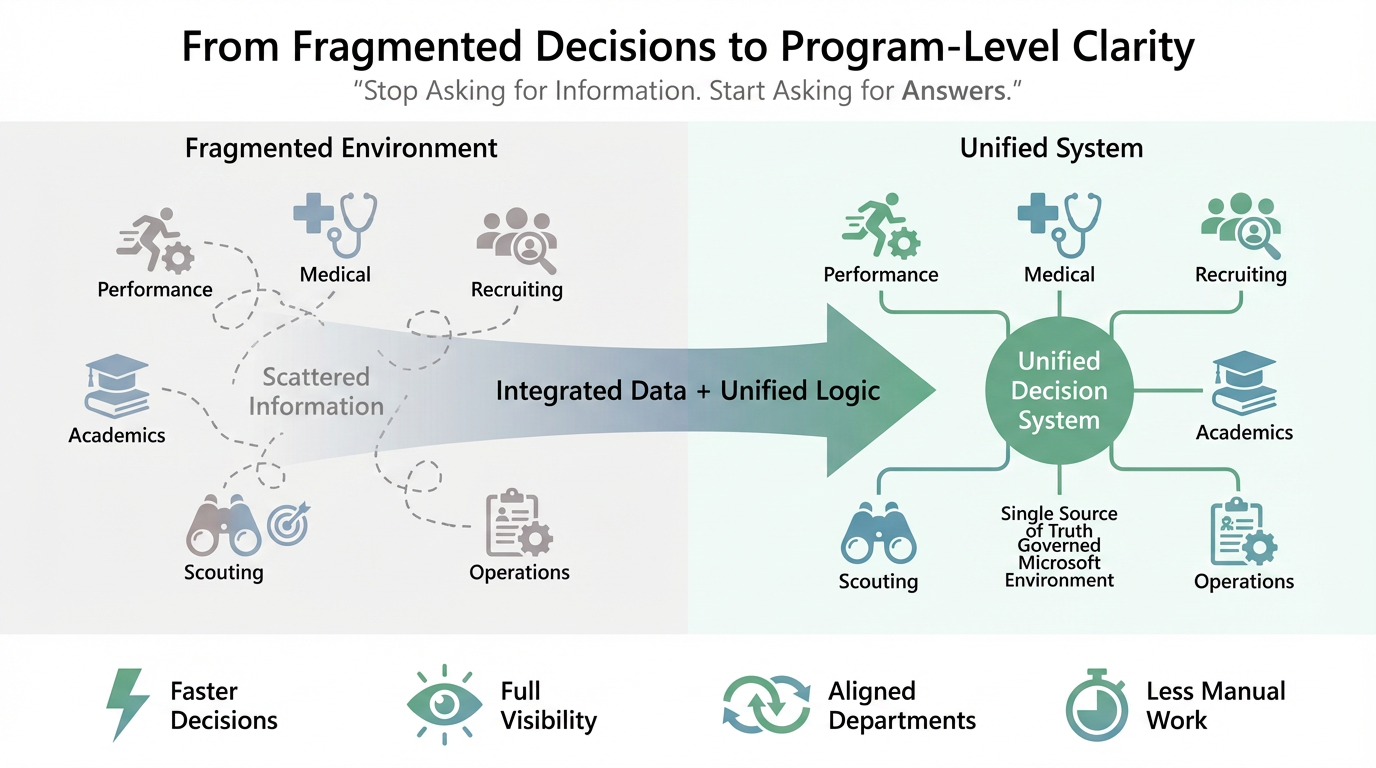
The impact was immediate. Before this system, leadership relied on scattered reports, manual reconciliation, and Excel spreadsheets to understand what was happening across the program. After implementation, decision-makers could view information from across the program in one unified dashboard. Administrative workload decreased, reporting friction was removed, and strategic conversations shifted from gathering information to interpreting it.
Beyond solving daily operational problems, the platform created a long-term competitive advantage. With more than 100 data sources unified within a governed Microsoft environment, the program now has a strong data foundation that can support advanced analytics, simulation, and AI modeling. Future improvements can build directly on a clean architecture instead of starting over with fragmented data.
Ultimately, this project did more than improve reporting. It changed how the program thinks about information. What was once siloed and reactive is now integrated and proactive. Leadership can make faster, better-informed decisions, and departments now operate with shared clarity. The program’s data system has become one of its strongest assets, ready to grow with the team.
DANNY DAVIS · Executive insights